
Gordon Smith
Independent copywriter, content producer and editor
In a year when concerns over AI hacking grew, and geopolitical instability reigns, speakers at the sixth annual Cyber Ireland National Conference 2026 (CINC26) provided a reassuring sense of realism and resilience. The tenor of the talks was grounded and measured, in contrast to the hype that often surrounds the cybersecurity sector.
More than 500 cybersecurity professionals, business leaders, policymakers, and researchers attended the event in Kilkenny, which was endorsed by the National Cyber Security Centre (NCSC) as Ireland’s national cybersecurity conference. Keynotes, panel discussions and industry insights throughout the day explored the theme of ‘Realising Ireland’s Cyber Industry Potential’.
Ireland’s cyber industry cluster continues growing
Cyber Ireland now has over 220 member organisations, up 16% on 2025. “With more members, we can have a bigger voice, and with a bigger voice, we can have a bigger impact,” said Cyber Ireland’s Cluster Manager Eoin Byrne.
AI dominated many conversations at the event, but a consistent message emerged throughout the day: strong fundamentals and collaboration do much to improve resilience against cybersecurity risks.
Simple cyber hygiene is still effective
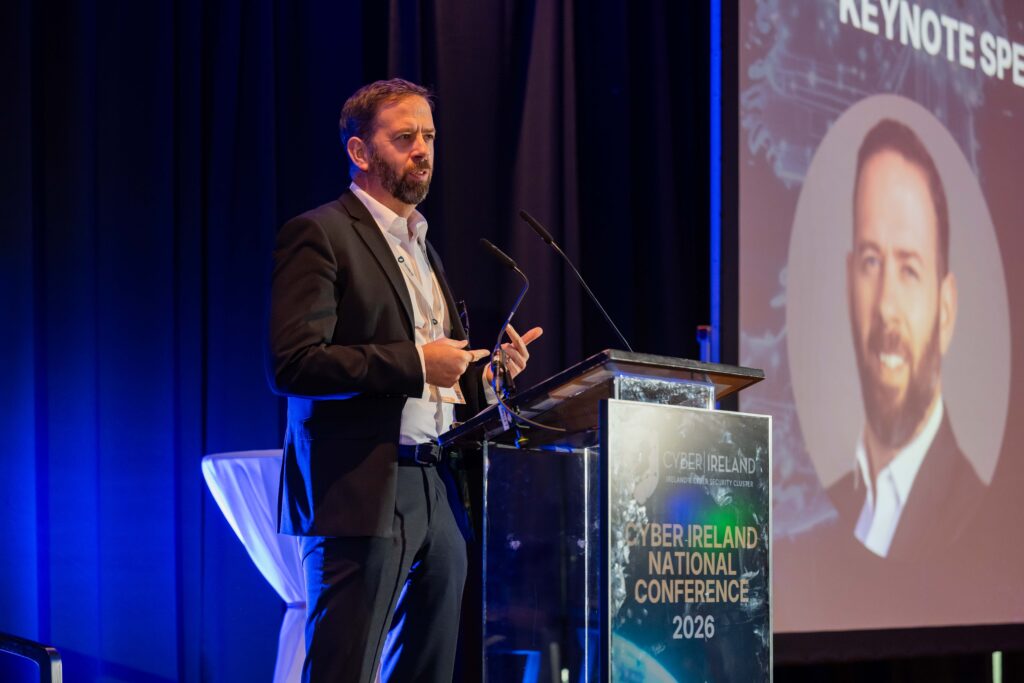
Richard Browne, Director of the NCSC, set the tone when he spoke of “an explosion in compromise detection”. Microsoft’s Patch Tuesday hit record figures during the summer, and Google Chrome uncovered close to 1,500 vulnerabilities over three months. AI models can detect vulnerabilities far faster than was ever possible before, but he argued that is a positive development. The sheer pace of discovery might seem overwhelming, but many of these flaws are longstanding risks that good cyber hygiene will protect against. “Basic, traditional cybersecurity controls are still effective against the vast majority of threats,” he said.
Colm Stapleton, the NCSC’s Director of Operations, shared statistics of cyber activity in the first half of 2026. Out of 2,620 incident reports, none were category 1 or category 2 incidents, which are the most severe. Of the 67 considered nationally significant, the NCSC determined that financial and espionage were the top motivations, with 28% each of the total. He said getting the basics right, like patching and updating passwords, will keep most attacks at bay, AI-enabled or not.

Managing cybersecurity at machine scale
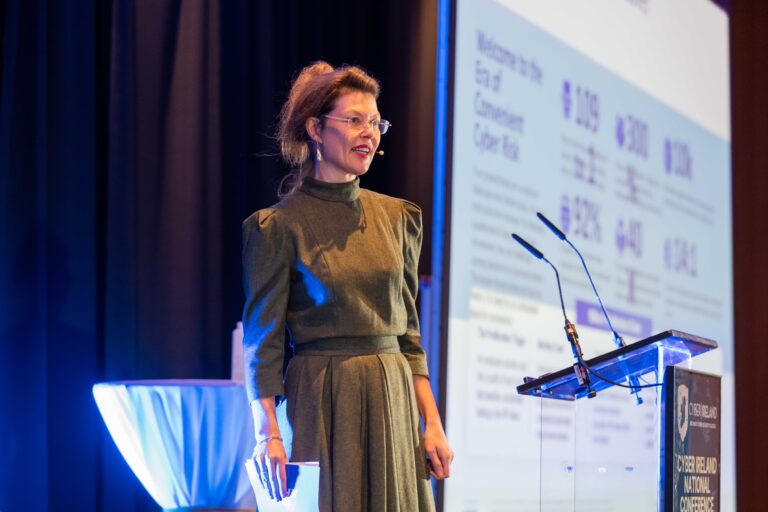
Dr Jayne Goble, Global Leader for OT Cyber Security Services at KPMG UK, said the rapidly rising ratio of machine identities for every person, currently 109:1, is forcing a rethink in cybersecurity. Without enough people to monitor, understand and respond to everything happening across connected operational environments, “the future will be machines guarding the machines,” she said. Humans’ role will be to oversee and evaluate what the machines are telling them, and make decisions based on that information.
Risk and responsibility: the board’s role
Boards now have more responsibility for managing cyber risk, driven by regulations like the NIS2 Directive, but cybersecurity is just as one of several enterprise risks to manage. Joseph Stephens, Director of Resilience at the NCSC, said: “No board’s mission is to be cyber secure; it’s an enablement function for the mission of the organisation.”
Maureen Breslin, an independent director, advised anyone tasked with communicating cyber risks to a board to avoid technical language. “The higher up you go, the simpler the message needs to be,” she said.

Cybersecurity skills in the age of AI
In a fireside chat about talent development for cybersecurity, Professor Barry O’Sullivan of UCC, acknowledged that AI will change how people work, but he countered the narrative that jobs and skills are being lost to AI. He argued that university courses should remain focused on fundamental skills in mathematics, computer science, the arts and in critical thinking which is essential in understanding AI models’ output. To keep up with fast-moving technologies that industries need, he recommended short, specialised courses, continuous professional development, and micro credentials.

Fostering Irish cybersecurity start-ups[
A panel discussion explored how to support early-stage cybersecurity companies. Acorn Life CISO Andrea Manning had encouragement for Irish cybersecurity startups looking to win key customers. She actively considers solutions from Irish SMEs, not just familiar brands, and said their products are often better and leaner, which buyers appreciate. She advised early-stage companies to help buyers by providing relevant information like endorsements or security credentials quickly.

Ireland’s cyber talent advantage
Ireland has a particular advantage when it comes to building cybersecurity start-ups: said Michael Hayden, Senior Client Advisor with Enterprise Ireland, and Cytidel founder Matt Conlon. There are security teams running global operations at large multinationals based in Ireland, so the talent is in place, and their roles give them an insight into customer challenges across a variety of markets. That’s especially valuable because Irish start-ups must think early about selling internationally to achieve scale.
Conclusion
Across discussions on AI, resilience, governance, talent and innovation, the message from CINC26 was clear: Ireland has the expertise, industry base and collaborative ecosystem to strengthen national resilience across public agencies, private businesses, and critical national infrastructure. The event showcased the growing maturity and ambition of Ireland’s cybersecurity ecosystem, and how we can realise Ireland’s cyber industry potential.
Key takeaways from CINC26
- AI finds more vulnerabilities but good security controls cover most gaps
- AI can augment human work in protecting and securing critical systems
- Jargon-free language is key to winning board support for cybersecurity
- Ireland’s cybersecurity ecosystem is a fertile proving ground for start-ups
- Many businesses are open to working with early-stage cyber SMEs
- Ireland can become a leading European cyber industry player through a collaborative approach of public-private partnership and investment.